
ADU vs. Guest House: What's the Difference and Which Should You Build?
If you've been exploring ways to make your property work harder for you — whether that means housing an aging parent, bringing in rental income, or simply creating more breathing room for your household — you've probably come across both terms. ADU. Guest house. They get used interchangeably online and in conversation, but they're not the same thing. And the difference matters more than most people realize.
Before you start drawing plans or calling contractors, here's what you need to understand.
Let's Start with the Definitions
An ADU, or accessory dwelling unit, is a self-contained residential unit located on the same property as a primary home. It has its own entrance, its own kitchen, its own bathroom. It functions, in every meaningful sense, as a complete home, just a smaller one. ADUs can be attached to the main house, built entirely detached, or built within an existing structure, such as a garage or basement.
A guest house, on the other hand, is a looser concept. Guest houses are typically designed for short-term visitors rather than independent, long-term living. They often share utilities with the main house, may not include a full kitchen, and are generally not intended as a separate dwelling. In most places, a guest house isn't classified as a dwelling unit at all, which is precisely where the legal and practical differences start to add up.
The terminology can get blurry depending on where you live. Some municipalities use "guest house" and "ADU" almost interchangeably in their zoning codes. Others draw a sharp line. This is why understanding your local regulations before you build is so important — more on that below.
Why the Distinction Actually Matters
The gap between an ADU and a guest house isn't just semantic. It has real implications for how you build, how you use the space, and what it means for your property in the long term.
Zoning and permitting are the biggest factors. ADUs are regulated as dwelling units, which means they go through a formal permitting process, one that has become significantly more streamlined in many states as housing policy has evolved. Guest houses often fall into a gray area: some jurisdictions permit them with minimal oversight, others restrict them heavily, and a few don't recognize the category at all. Knowing which rules apply in your area before you break ground is essential.
Rental income is another key difference. Because an ADU is a legally recognized dwelling, you can typically rent it out on a long-term basis. A guest house generally cannot be rented; it exists to house guests, not tenants. If passive rental income is part of your plan, an ADU is the path that actually gets you there legally and clearly.
Utility connections vary, too. ADUs are usually set up with separate utility meters or at least the infrastructure to support independent living. Guest houses often share connections with the main home, which can complicate things if you ever want to separate usage, bring in tenants, or eventually sell.
And then there's property value. A properly permitted ADU adds measurable, documented value to your property. A guest house adds livable square footage, but its impact on appraised value is less predictable, and unpermitted structures can actually create complications when it comes time to sell or refinance.
Why More Families Are Choosing ADUs
There's a reason ADUs have become one of the most talked-about housing solutions of the last decade. They offer something that's genuinely hard to find: flexibility that grows with your life.
For families navigating multigenerational living, an ADU means parents or grandparents can live close without living on top of each other. Privacy on both sides. Independence with proximity. It's a solution that honors connection without sacrificing it, and one that's becoming more common as families rethink what it means to live near the people they love.
For homeowners thinking about the long game, an ADU can function as a rental unit today and a caregiver's quarters tomorrow. Or the reverse. A space for a college student returning home, a home office with a bathroom and kitchenette, and a creative studio. The space evolves with your life rather than locking you into a single use.
For communities grappling with housing costs and availability, ADUs represent a quieter, more neighborhood-friendly way to add density without the disruption of large-scale development. More and more municipalities are recognizing this, which is part of why ADU permitting has become easier in many places across the country. Several states have passed legislation in recent years specifically to remove barriers to ADU construction, making now a genuinely good time to explore your options.
What to Think About Before You Build
If an ADU feels like the right direction, a few considerations are worth working through early in the process.
Start with local zoning. ADU regulations vary significantly by state and municipality. Some areas have embraced ADUs enthusiastically, streamlining permits and loosening restrictions on lot coverage and setbacks. Others still have meaningful barriers in place. Understanding what's allowed on your specific property — and what the permitting process looks like locally — will shape everything else, including your budget and timeline.
Think about placement. Detached ADUs offer the most privacy and independence, but they require more space and typically cost more to build. Attached ADUs share a wall with the primary home and can be more cost-effective. Garage conversions are often the most budget-friendly option, repurposing existing square footage rather than building new. Each approach has tradeoffs, and the right choice depends on your lot, your goals, and how you intend to use the space.
Consider how the ADU relates to the main home. The best ADU designs feel intentional — not like an afterthought dropped at the back of a lot. Matching materials, complementary massing, shared landscaping — these details matter both aesthetically and for your property's overall cohesion. A well-designed ADU should read as part of a thoughtful whole, not a separate project stapled on after the fact.
Designing an ADU with Intention: The Sustainability Angle
This is where the conversation gets interesting, and where a lot of generic ADU advice falls short.
Because ADUs are small, every design decision is amplified. The wrong window placement doesn't just mean one uncomfortable room; it means an uncomfortable house. Poor insulation doesn't just raise one bill; it affects the entire structure. But the flip side is equally true: a small building that's designed well can be remarkably efficient, comfortable, and healthy to live in. The constraints of a smaller footprint are actually an invitation to build more thoughtfully.
Orientation matters enormously. Passive solar design, positioning the structure to capture winter sun and minimize summer heat gain, is one of the most cost-effective tools available to any builder, and it's especially impactful in a compact space. A well-oriented ADU with properly sized south-facing windows can dramatically reduce heating loads without adding a dollar to your mechanical systems budget. This is something to think through at the plan stage, before anything is fixed on the site.
Thermal mass is worth understanding. Materials that absorb heat during the day and release it slowly at night — concrete, earthen plasters, certain masonry — can help regulate interior temperatures naturally, reducing reliance on mechanical heating and cooling. In a small ADU, even modest thermal mass can have a noticeable effect on how the space feels and how much energy it uses over time.
Hempcrete is worth a serious look for ADU construction. As a building material, hempcrete, a blend of hemp hurd, lime, and water, has properties that make it particularly well-suited to smaller structures. It's vapor-permeable, which means it manages moisture naturally rather than trapping it. It offers moderate thermal mass with good insulating value. It doesn't off-gas volatile organic compounds the way some conventional building materials do. And because it's made from a rapidly renewable crop, its environmental footprint is significantly lower than many alternatives.
For an ADU intended for long-term habitation, whether by a family member, a tenant, or eventually yourself, indoor air quality and material health matter just as much as the square footage. A hempcrete ADU built with lime plaster walls, natural flooring, and thoughtful passive ventilation is a fundamentally different living environment from a conventional stick-framed box. Smaller, but healthier.
Ventilation is non-negotiable. Small spaces can suffer from poor air quality, especially when they're tightly built. A mechanical ventilation strategy, even a simple ERV, ensures proper air exchange without sacrificing the thermal performance you've worked to achieve.
If you are thinking about healthy interiors, our Healthy Homes package is a 600+ page guide to VOC-free finishes and non-toxic materials for every surface in your home, available as an add-on to any plan. Learn more here.
Water efficiency is easier to address in a small structure. Low-flow fixtures, a compact water heater positioned close to points of use, and thoughtful plumbing layouts all have an outsized impact when the footprint is small. If your jurisdiction allows it, greywater reuse systems are also worth exploring for garden irrigation.
None of this requires building a showpiece or stretching a budget beyond reason. It requires asking the right questions at the design stage and choosing a plan built around these principles, rather than trying to retrofit sustainability into a design that was never meant for it.
A Note on Style and Cohesion
An ADU that looks like it belongs on the same property as the main house is a better ADU, not just aesthetically, but in how neighbors and future buyers perceive it, and how the overall property functions as a place to live.
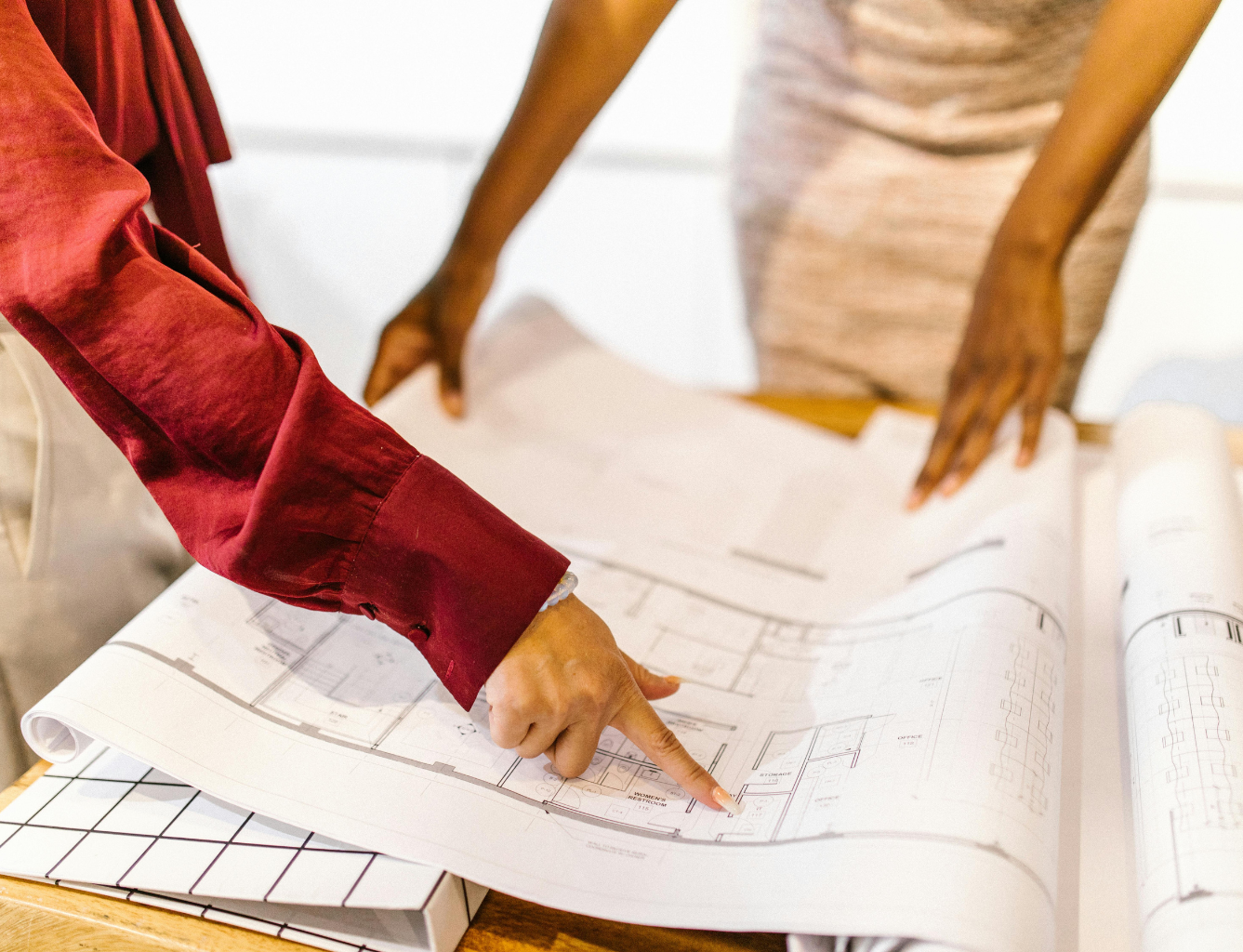
That doesn't mean the ADU has to be identical to the main home. It means the relationship between the two structures should be considered. Shared roof pitches, similar exterior materials, complementary window proportions, consistent landscaping; these are the elements that make a property feel unified rather than cobbled together. When you're selecting a plan, it's worth thinking about how it will sit alongside your existing home, not just how it will function on its own.
Ready to Find Your ADU Plan?
Whether you're dreaming of a cozy detached cottage, a garage with a full living space above, or a compact hempcrete ADU built for the long haul, we have plans designed with intention across both our Traditional House Plans collection and our Hempstead Living line.
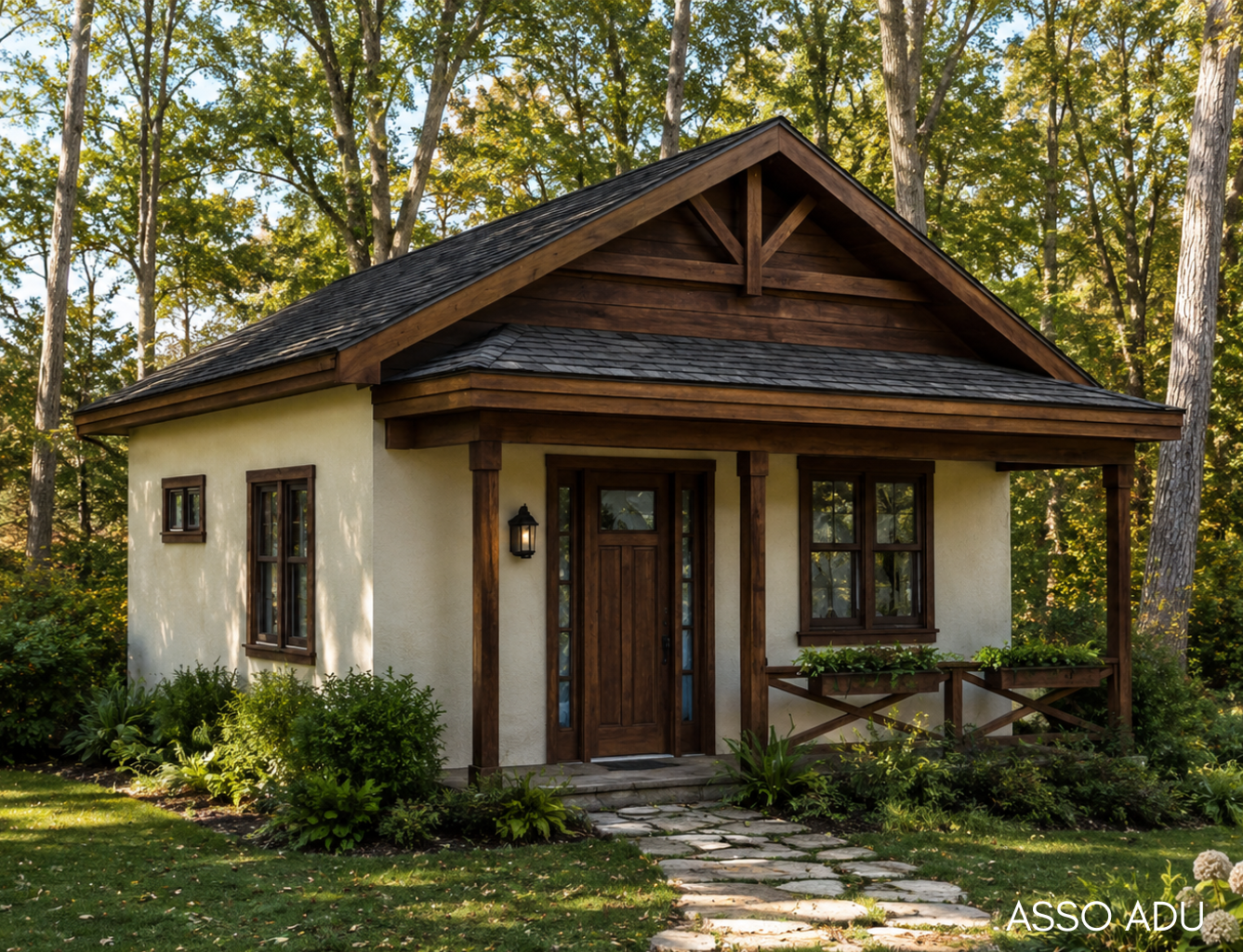
Our Asso ADU house
Your property has more potential than you think. Browse our ADU and garage plans and find the one that fits your lot, your life, and your values. And if you're not sure where to start, we're always happy to help you figure it out.