
How Much Does It Cost to Build a House in 2026?
So you're thinking about building a home. Maybe you've been scrolling through house plans late at night, dreaming about the floor plan that feels just right, the one that fits how your family actually lives. And somewhere in the back of your mind, the big question keeps surfacing: How much is this actually going to cost me?
It's the question everyone asks, and it deserves a real answer. Not a vague "it depends" and definitely not a number pulled from thin air. Let's walk through what the data actually says, what you should expect, and most importantly, how to set yourself up for success before you ever break ground.
What Does It Actually Cost to Build a House?
Here's the truth: the cost to build a home varies enormously depending on where you live, the size of the home, the materials you choose, and your builder's labor costs. But we do have solid national benchmarks to work from.
According to the National Association of Home Builders' 2024 Construction Cost Survey (the most recent data available, published in early 2025), one of the most comprehensive annual studies on residential construction, the average construction cost of a newly built single-family home was $428,215, or approximately $162 per square foot. That's based on an average home size of about 2,647 square feet. Given the ongoing labor shortages and rising material costs, 2026 figures are likely to be higher; therefore, treat this as a strong baseline rather than a ceiling.
That number covers everything it takes to build the home: foundation, framing, systems, finishes, and final steps. It does not include the cost of your land, which varies substantially by location. The good news is that construction cost is also the part you have the most influence over, and that influence starts with the plan you choose.
Breaking Down Where the Money Goes
One of the most useful things the NAHB study gives us is a clear look at how construction dollars are actually spent. Here’s how the major categories are allocated, based on that $428,215 average.
Interior Finishes (24.1%, approximately $103,000) is the largest single category, covering insulation, drywall, interior trim, painting, lighting, cabinets, countertops, appliances, and flooring. Your finish selections have a huge impact here. This is where builds can balloon or stay on budget. For homeowners who want to be intentional about both cost and material quality, our Healthy Homes specification package highlights vetted low-VOC and environmentally responsible interior selections.
Major Systems Rough-ins (19.2%, approximately $82,000) covers plumbing, electrical, and HVAC. These are non-negotiables, and they've been climbing steadily as a share of total costs. Together, they account for nearly a fifth of your build.
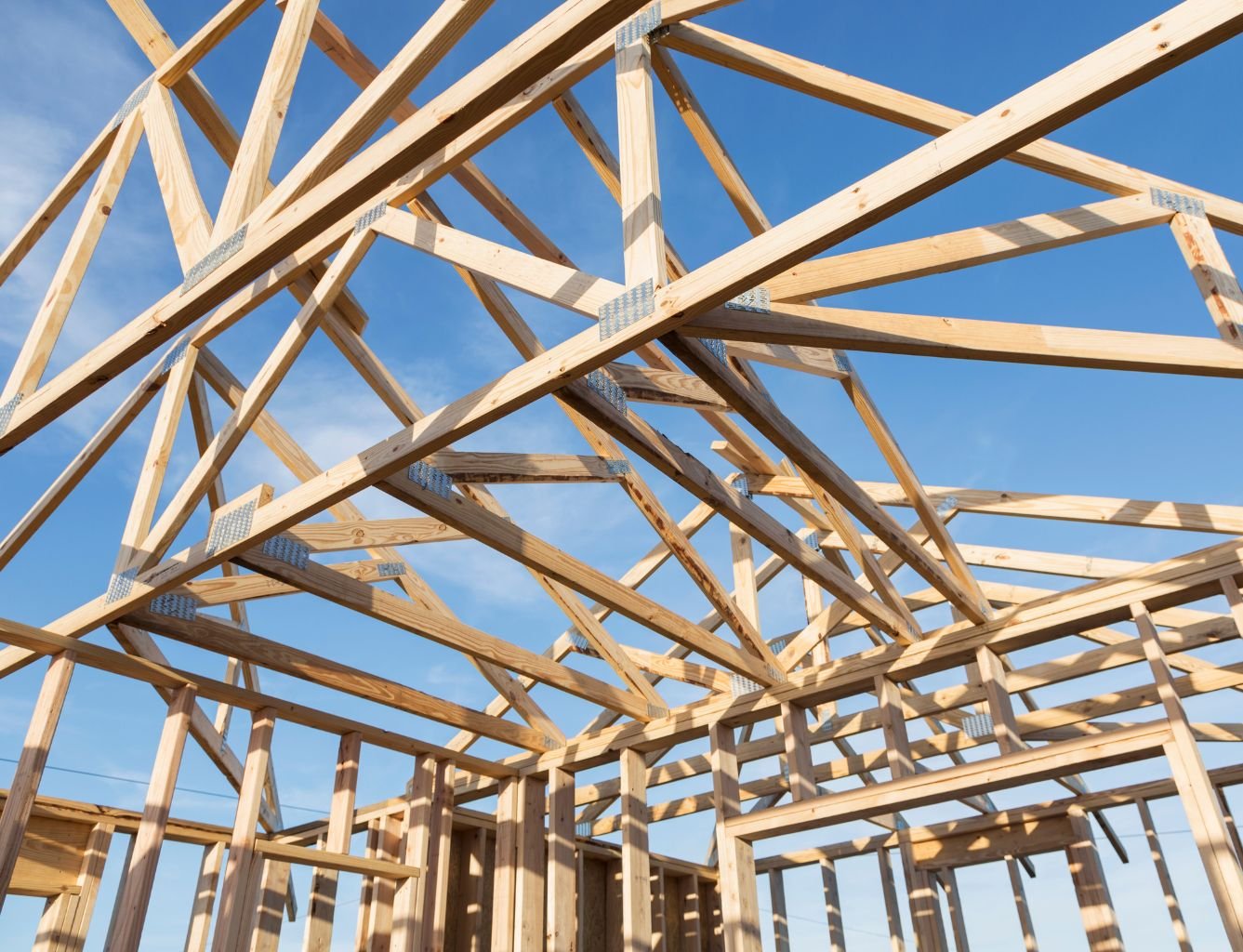
Framing (16.6%, approximately $71,000) is the bones of your home: framing, trusses, sheathing, and structural steel. Because it scales directly with square footage and structural complexity, simpler designs can significantly reduce this cost.
Exterior Finishes (13.4%, approximately $57,000) includes your exterior wall finish, roofing, windows, and doors. This is where material choices such as fiber cement, brick, wood siding, or innovative systems like hempcrete can significantly influence both cost and performance.
Foundation (10.5%, approximately $45,000) covers excavation, concrete, retaining walls, and backfill. Site conditions and lot topography will strongly influence this number.
Site Work (7.6%, approximately $33,000) includes permits, impact fees, water and sewer connections, and architecture and engineering fees.
Final Steps (6.5%, approximately $28,000) covers landscaping, driveway, outdoor structures, and cleanup. Often underestimated, these costs add up fast.
Building a home is not one big expense. It's dozens of decisions, each with its own cost implication. Having a solid plan from day one is what keeps those decisions manageable.
The Variables That Can Shift Your Number
If you've looked into the cost of building a house online, you've probably noticed numbers ranging from under $100 per square foot to well over $400. That range is real, and here's why.
Geography matters enormously. Labor costs in Charleston, SC, differ dramatically from those in San Francisco or rural Idaho. Local contractor availability, material supply chains, and regional building code requirements all play a role.
Home size and layout. Smaller homes typically cost more per square foot, not less, because fixed costs like HVAC systems, kitchens, and bathrooms get spread over fewer square feet. A well-designed, efficient plan can help control this cost dynamic, especially when square footage is used intentionally, as seen in our small home house plans.
Material choices. Standard vinyl windows vs. wood-clad, builder-grade cabinets vs. semi-custom, laminate flooring vs. hardwood: every selection is a decision point.
Lot conditions. A flat, well-prepped lot is very different from a sloped site with drainage challenges. This is often the wildcard in a budget.
Builder relationship and contract type. Cost-plus contracts differ from fixed-price bids in how pricing, risk, and contingencies are handled, and your relationship with your builder plays a major role in how those costs are managed.
This is exactly why a cost-per-square-foot estimate is a starting point, not a final answer. The only way to get a real number is to take a real plan to real builders in your area.
This Is Where the Right House Plan Changes Everything
Here's something we've seen over and over: people spend months, sometimes years, dreaming about their future home, and then skip straight to talking to builders without an actual plan in hand. What they get back are vague estimates with huge ranges, because the builder has nothing concrete to price.
A proper architectural house plan isn't just a drawing. It's the document that allows builders to give you a meaningful, accurate bid. It's the tool that lets you compare equivalent scopes of work across multiple contractors. It's the foundation, pun intended, for your entire project.
At Root Down House Plan Co., our plans are architect-designed and go far beyond what you'll find in standard stock plan catalogs. They're built with real construction details, the kind that saves time, prevents errors, and helps your builder price accurately.
Our Process: How We Help You Get From Dream to Shovel-Ready
We’ve structured our house plan process to support you at every stage, whether you’re exploring ideas or ready to move toward construction.
Step 1: Start with a Viewing Set ($75)
Before you commit to a full construction set, we offer a Viewing Set for just $75. This is an electronic PDF (11" x 17") that includes the floor plans, roof plan, and all four exterior elevations. It's the perfect tool to start sharing your vision with your family, your builder, and your lender, and to get a rough initial budget in place.
Think of it as your first real conversation with the numbers. Take it to one or two local builders and ask: "What's your ballpark on this?" You'll get far more useful feedback than you would with nothing in hand. And you'll know early whether the design aligns with your budget before making a larger investment.
Step 2: The Bidding Set
When you're serious about a plan, the Bidding Set is your next step. This is a full-size PDF (24" x 36") of the complete construction documents, stamped "not for construction, for bidding purposes only." It includes everything your builder needs to price your home accurately: floor plans and roof plans, all four exterior elevations, building sections, high-performance wall sections, window and door schedules, an electrical diagram plan, interior elevations, general notes on residential building codes, and our Healthy Homes specification package for high-performance material options.
This is the document that gets you real numbers from real builders, not guesses.
Step 3: License to Build
Once you've selected your builder and you're ready to move forward, you'll purchase the License to Build. This is a one-time license agreement to build the design once. At this point, we remove our watermarks and "not for construction" notations, and you receive your clean construction set, ready for your local building department and your builder to run with.
Optional: Customization and Full Architectural Services
Want to modify a plan to fit your lot, your lifestyle, or your family's specific needs? We offer custom edits to any of our plans. Every plan in our Traditional collection can also be built using hempcrete, and our Hempstead Living collection is designed specifically for this sustainable, high-performance material. For projects in North and South Carolina, full architectural and structural engineering services are available through our sister firm, Root Down Designs, including site planning, zoning compliance, energy code analysis, HVAC design, and construction administration.
Our Free 101 Guides: Know Before You Go
We also offer free 101 guides, downloadable resources that walk you through exactly what you need to know before purchasing a house plan. Whether you're looking at our Traditional Homes collection or our sustainable Hempstead Living plans, there's a guide for you:
Download the Traditional Plans 101 Guide
Download the Hempstead Living 101 Guide
They’re completely free, no strings attached. Our goal is to help you feel informed and confident to make the best decisions for your home.
A Note on Our Plans: Built Different
Our plans are carefully detailed, thorough, and builder-ready, offering more guidance than typical online stock plans. They've been developed by licensed architects with extensive construction experience, and include features that exceed standard code requirements.
Every plan in our collection can also be paired with our Healthy Homes specifications, a framework for incorporating high-performance and bio-based materials into your build. Whether you want to reduce your carbon footprint, improve indoor air quality, or simply build a home that performs better for decades, this framework provides a clear roadmap for you and your builder.
As one of our clients put it: "We do not believe we could have built our home, with all of our principles intact, AND within our budget, had we not used a Root Down House Plan."
That's the point. A better plan leads to a better build.
So, What Will YOUR Home Cost?
Honestly? There’s no exact answer until a qualified builder evaluates your plan on your lot.
But here's what we can tell you: the national average construction cost is around $162 per square foot,
according to NAHB's most recent data. That's a useful starting point. From there, your location, your design choices, and your builder's pricing will tell the rest of the story.
The smartest first step you can take is to find a plan you love, invest $75 in a Viewing Set, and take it to a couple of local builders. You'll learn more from that conversation than from hours of online research.
Browse our house plan collection
Learn more about our plans and process
Cost data referenced in this article is drawn from the National Association of Home Builders' 2024 Construction Cost Survey (published January 2025), the most recent edition available as of early 2026. These figures represent national averages and are not adjusted for regional variation. Actual 2026 costs may be higher. Consult local builders for accurate estimates in your market.