
Hempcrete vs. Straw Bale vs. Rammed Earth: Which one is right for your build?
If you've spent any time researching natural building materials, you've probably come across more than one option. Straw bale, rammed earth, and hempcrete all fall under the broader category of sustainable, low-impact construction. They share many of the same values, but they differ significantly in how they perform, how they're built, and what it takes to design and permit a home around them.
We get asked about this comparison often, and we think it deserves an honest answer. Here's how we see it.
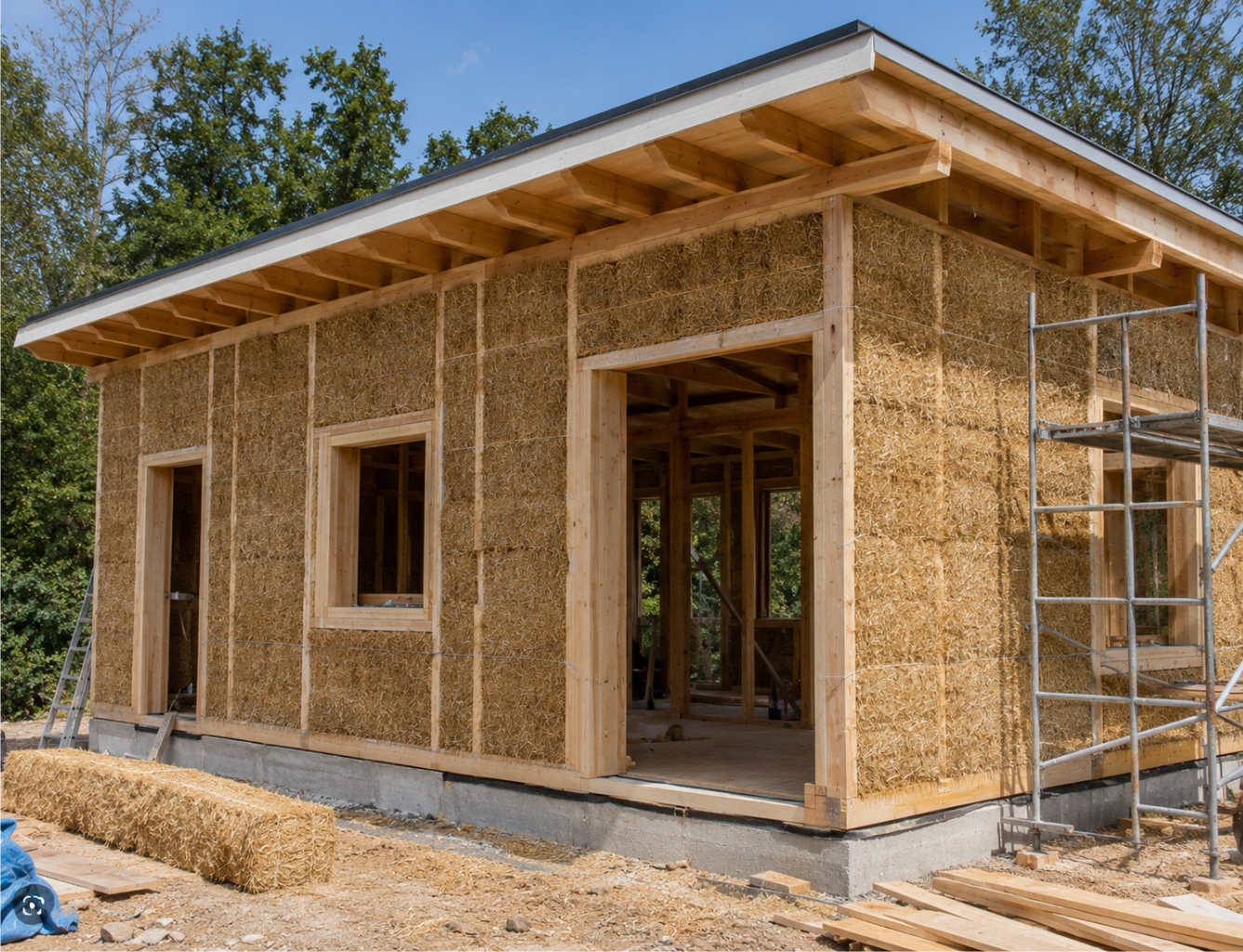
Straw Bale
Straw bale construction has deep roots in American building history, particularly in the Great Plains, where baled straw was once one of the most practical materials available. Today, it remains one of the most recognised natural building methods and continues to attract homeowners interested in energy efficiency and low-impact construction.
What it does well
Straw bale walls are known for their excellent insulating properties. In simple terms, they do a very good job of slowing the transfer of heat, helping homes stay warmer in winter and cooler in summer. That can lead to more consistent indoor temperatures and lower energy use throughout the year.
The thick walls created by stacked straw bales provide a high level of thermal resistance, making straw bale especially appealing in colder climates where retaining heat is a priority.
The material itself is an agricultural byproduct, making it renewable and often readily available in farming regions. Straw bale construction also has a strong owner-builder tradition, and many successful projects have been completed through hands-on, community-driven building efforts.
Where it gets complicated
Moisture management is one of the most important considerations in straw bale construction. Because straw is an organic material, wall assemblies must be carefully designed to keep moisture levels within a safe range. Proper plaster systems, roof overhangs, site drainage, and construction detailing all play an important role in long-term durability.
Permitting can also vary depending on location. While modern building codes include provisions for straw bale construction, adoption and interpretation differ among jurisdictions. Some projects may still require engineering review or additional documentation during the approval process.
Finding experienced builders can be another challenge. Straw bale construction requires specialized knowledge, and qualified contractors are often concentrated in specific regions rather than widely available nationwide.
Rammed Earth
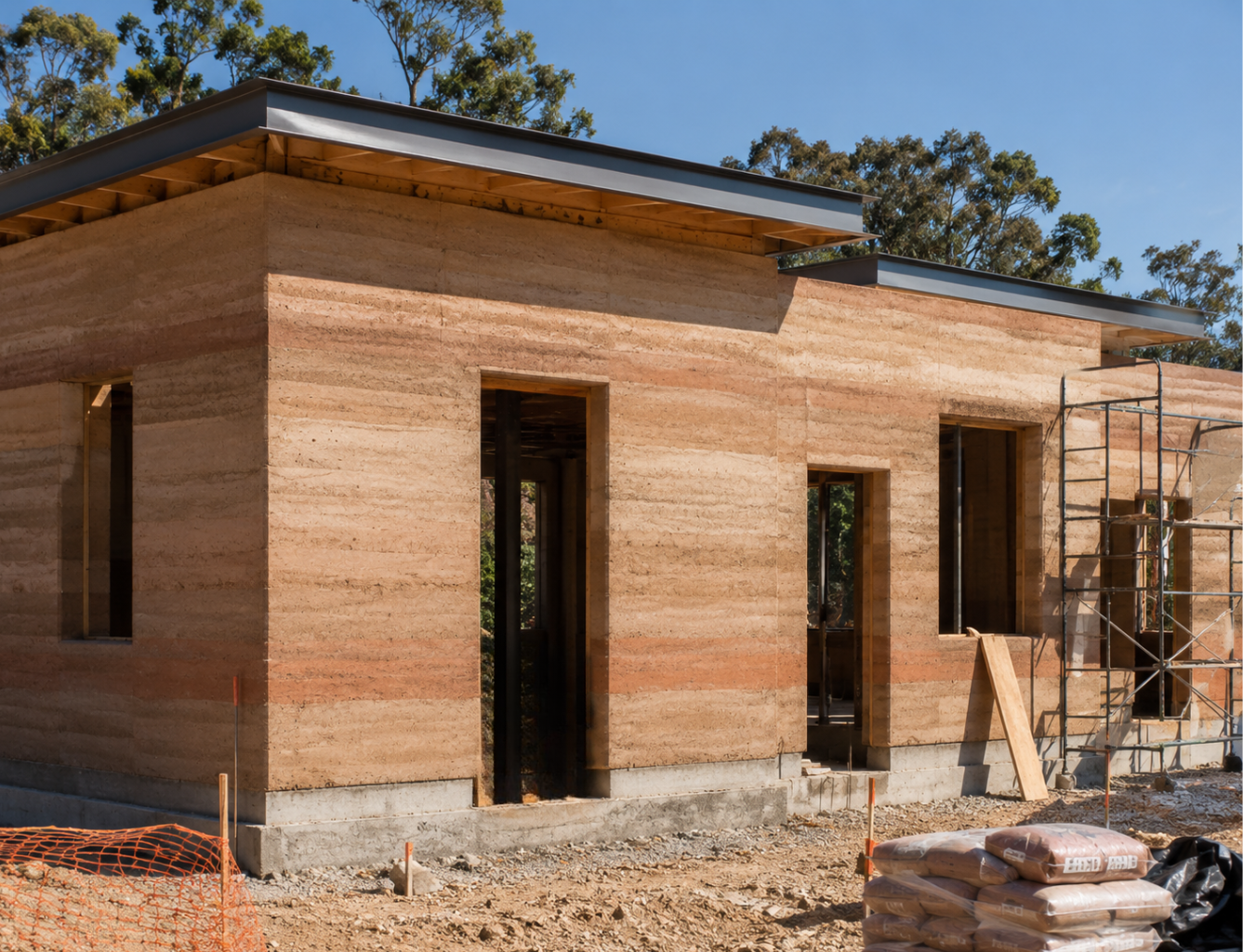
Rammed earth is one of the oldest building methods in the world. Walls are created by compacting layers of soil within temporary forms, producing thick, solid structures with remarkable durability and a distinctive appearance.
What it does well
Rammed earth is known for its exceptional thermal mass. The dense walls absorb and store heat, then release it gradually over time. In climates with significant day-to-night temperature swings, this can help moderate indoor temperatures and reduce heating and cooling demands.
It is also highly durable. Properly designed rammed earth structures can last for generations and offer strong resistance to fire, pests, and weathering.
Visually, few materials are as distinctive. The natural layering created during construction gives each wall a unique texture and character that many homeowners find appealing.
Where it gets complicated
Rammed earth construction is labor-intensive and often requires specialized equipment. Forming, compacting, and stabilizing walls can increase construction costs compared to more conventional methods.
The material is often most economical when suitable soil is available on or near the building site. If soil must be imported, costs can rise quickly.
Climate is another consideration. Rammed earth performs especially well in regions where thermal mass can be fully utilized. In wetter or colder climates, additional stabilization, insulation strategies, and moisture detailing are often needed to achieve the desired performance.
As with straw bale construction, experienced rammed earth contractors can be difficult to find in some areas, which may limit project options.
Where Hempcrete Fits
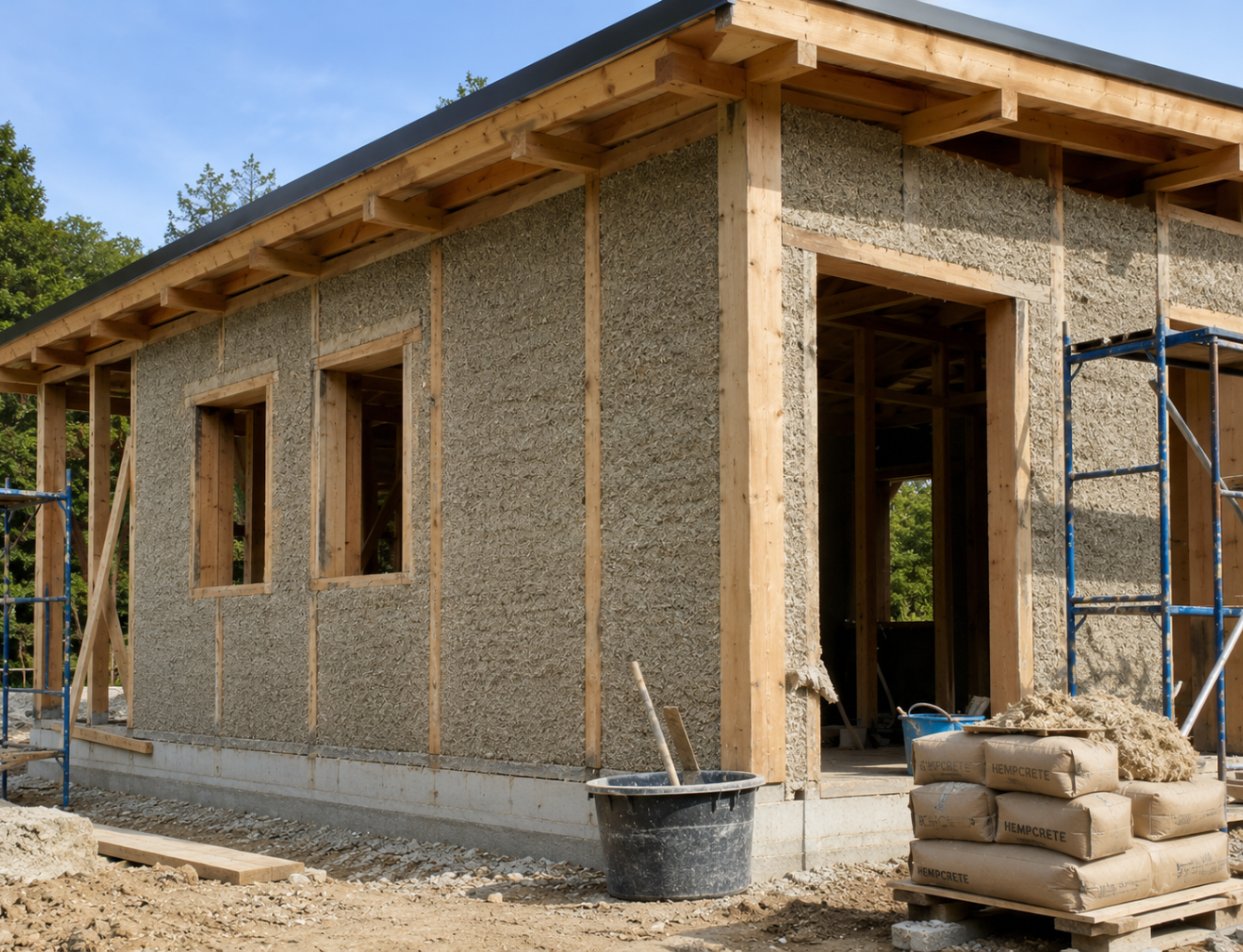
Hempcrete shares many of the same values as both straw bale and rammed earth. It is plant-based, vapor-permeable, and designed to support healthy indoor environments. However, several characteristics distinguish it within today's building landscape. If you're new to the material, you can learn more about what hempcrete is and how it functions as a building system.
A clearer code pathway
One of the biggest developments for hempcrete in recent years has been increased code recognition. Hemp-lime construction is now addressed under ICC AC509, providing a more defined pathway for residential construction in many jurisdictions. We explore this topic in more detail in Can You Build a Hempcrete House in the US? What Homeowners Need to Know Before Buying Plans.
Permitting requirements still vary by location, but the approval process is generally more established today than it was only a few years ago.
Performance across a range of climates
Unlike materials that rely primarily on either insulation or thermal mass alone, hempcrete combines insulation, thermal mass, and vapor permeability in a single wall system.
This combination allows hempcrete to perform effectively across a wide range of climates, from hot and humid regions of the Southeast to colder areas of the Mountain West and Northeast. As with any building system, success depends on good design, proper detailing, and climate-appropriate construction practices. We take a closer look at regional considerations in Is Hempcrete Right for Your Climate?.
A growing contractor network
As interest in hemp building continues to grow, so does the number of professionals working with the material. Organizations such as the Hemp Building Association, along with increasing availability of prefabricated hempcrete systems and panels, have helped expand access to training and construction expertise throughout the United States.
At Root Down, we've embraced this evolution through our partnership with Homeland Hempcrete, designing homes specifically for their panelized hempcrete building system as part of our Hempstead Living Collection.
While hempcrete is still a specialized building method, finding experienced designers, manufacturers, and builders is becoming easier than it was even a few years ago. We discuss these industry developments in A New Era for Accessible Hempcrete Homes.
Moisture buffering and indoor comfort
Like all wall systems, hempcrete requires proper detailing and moisture management. However, its vapor-open structure and lime-based binder allow the material to absorb, store, and release moisture naturally as environmental conditions change.
The lime binder also creates an alkaline environment that resists mold growth while contributing to the material's durability. Many homeowners are drawn to hempcrete for its ability to support stable indoor humidity levels and a comfortable living environment throughout the year. We explore these qualities in more detail in Why Hempcrete Walls Feel Different.
No Single Right Answer
We want to be clear: we are not suggesting that straw bale or rammed earth are inferior choices. Both materials have been used to create beautiful, durable, and high-performing homes around the world, and each offers unique advantages depending on the project.
What we can say is that, for the types of homes we design and the clients we work with across a wide range of climates and building environments, hempcrete offers a compelling balance of performance, durability, comfort, and code accessibility.
Every building material involves trade-offs. The best choice depends on your climate, your site conditions, your budget, your construction team, and your goals for the finished home.
In our experience, hempcrete often requires fewer compromises between energy performance, moisture management, indoor comfort, and code acceptance than many other natural building systems. That's why it serves as the foundation for our Hempstead Living House Plans.
If you're exploring natural building options, start by understanding the specific demands of your project. The right material isn't necessarily the most popular one—it's the one that best aligns with your climate, priorities, and long-term vision for your home.
Curious whether a hempcrete home could work for your site and location? Browse our Hempstead Living plans or reach out with your questions. We'd be happy to help.